


Goal
- Participants get inspiration for future development plans.
- They gain consciousness about their development in terms of values, belonging(s), social attitudes, roles, and life choices

Steps
1. Each participant receives a picture of a river drawn on a large piece of paper. The beginning and the end of the river should be marked on the paper. Papers of different colors, scissors, glue, pencils, and markers should be made available.
2. Working individually, particpants then represent their choices and commitments during a certain period of life and/or in relation to a certain dimension of their identity. For example, how/why they changed jobs, how their relationship to their family has changed, at what point they took on a new role in society...
3. Participants should place the results of their efforts onto whichever part of the river they consider appropriate.
Reflection
- What were the crucial points?
- Where was the water calm?
- Where were you travelling with the current?
- When did you have to go against the current?
- Where was the water moving quickly?
- Where and what did you learn (about yourself and your identity)?
Understanding You(th)
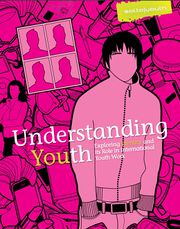
Published in the handbook Understanding You(th). Exploring Identity and its Role in International Youth Work. Created by Nik Paddison (ed.) for SALTO-YOUTH Cultural Diversity Resource Centre.
Experiences
This activity is also useful for talking about things besides identity. For example one could evaluate an individual’s learning journey.
One could also address the diverse experiences of past group activity. Given an adequate level of mutual trust in the group, this sharing can be extremely rewarding.

